- Browse/Search the Program

Search

Program Calendar

Browse By Day
Browse By Unit
Browse By Session Submission Type
Browse By Descriptors
- Information Menu
Search Tips
Virtual Exhibit Hall
- Navigation and Settings Menu
Personal Schedule

Sign In
| Welcome Guest. You may view the program without logging in. However, you will not be able to save a personal schedule unless you sign in first. Click the 'lock' icon at the upper-right corner to sign in. 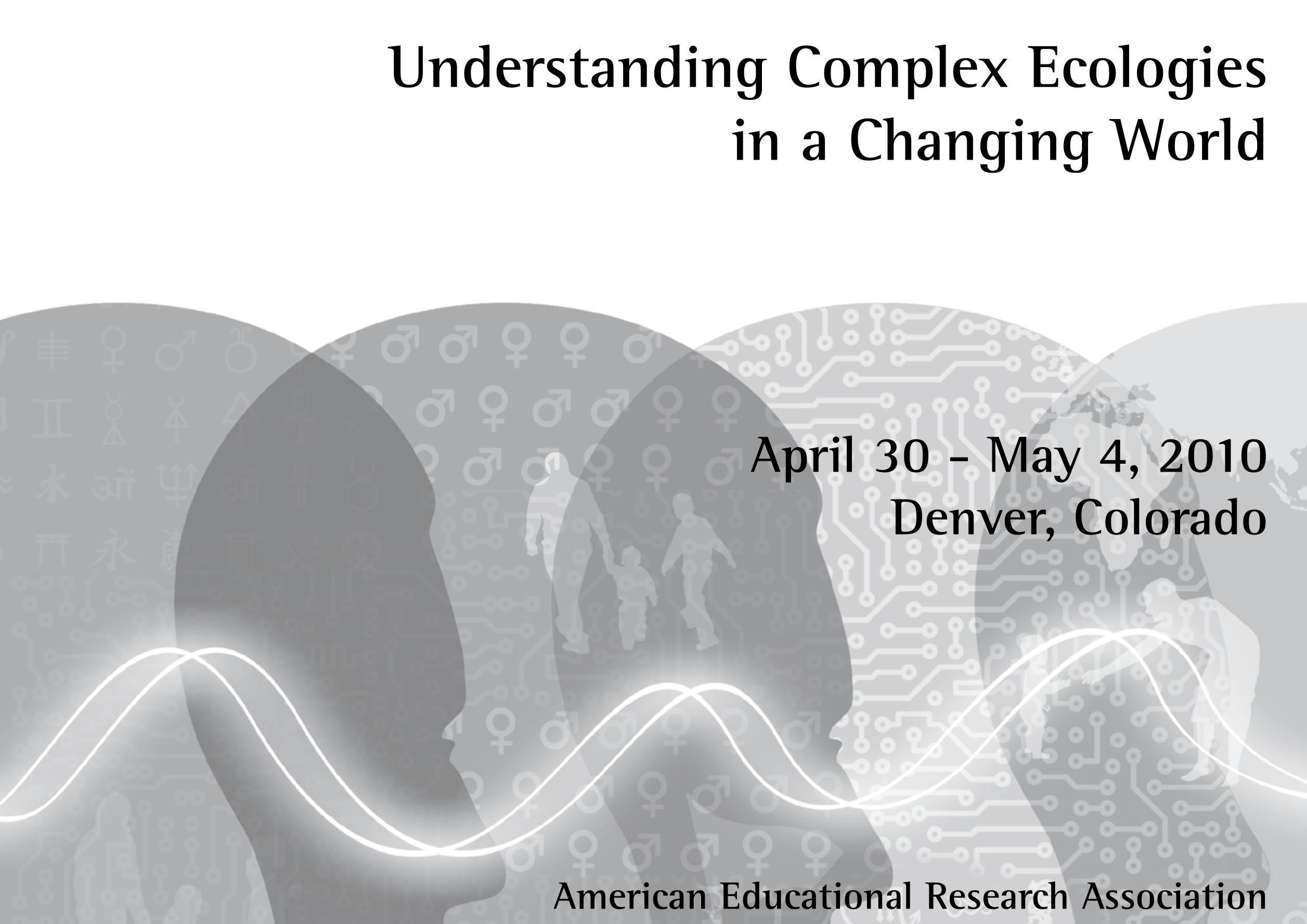 2010 Annual Meeting Denver, Colorado Theme: Understanding Complex Ecologies in a Changing WorldEducation research sits inside what Donald Stokes calls “Pasteur’s Quadrant,” referring to the dual focus of building basic theory while simultaneously improving practice. This process occurs through attention to individual psychological functioning (cognitive, social, emotional); social organization of settings; curriculum design and assessments; educational policy; or historical, political, and economic circumstances as they influence opportunities to learn. Opportunities to learn within and across both formal and informal settings occur in the complex ecologies of peoples’ lives, not isolated in a single setting such as a school or family. These complex ecologies include people’s participation within and across multiple settings, from families to peer and intergenerational social networks, to schools and a variety of community organizations; and participation within and across these settings may be either physical or virtual. Our attempts to understand and influence such learning often try to strip away complexity for presumed efficiency. |